
Regenerative agriculture.
Regenerative agriculture focuses on restoring ecosystems while maintaining productive and economically viable farming systems.
Executive Summary
Agriculture - including crops, livestock, aquaculture, and forestry - accounts for 13–21% of global greenhouse gas emissions, rising to 34% when the full agrifood system including transportation is included. Nearly half of the world’s habitable land is used for agriculture: about one-third as cropland (over half for animal feed and biofuel) and two-thirds as grazing land.
Why it matters
Modern agricultural practices have led to widespread soil degradation, biodiversity loss, and increasing pressure on water systems, threatening long-term food security and ecosystem stability.
Why now
Climate change, resource depletion, carbon-intensive fertilizers and increasing volatility in agricultural systems are accelerating the need for more resilient and sustainable farming approaches.
Investment
Regenerative agriculture presents a significant opportunity to invest in systems that improve land productivity, reduce long-term costs, and generate environmental and economic value.
Introduction
Regenerative agriculture is an approach to farming that focuses on restoring soil health, increasing biodiversity, and improving water cycles while maintaining productive agricultural systems.
Over the past decades, conventional agricultural practices have contributed to soil degradation, loss of organic matter, and reduced ecosystem resilience. These challenges are now being amplified by climate change, creating increasing pressure on food systems worldwide.
Regenerative agriculture aims to reverse these trends by rebuilding natural systems rather than depleting them. By improving soil structure, enhancing biological activity, and reducing dependency on external inputs, regenerative systems can create more stable and resilient agricultural production over time.
Key idea
Agriculture must shift from extractive systems toward regenerative systems that rebuild natural capital and soil resilience.
The What
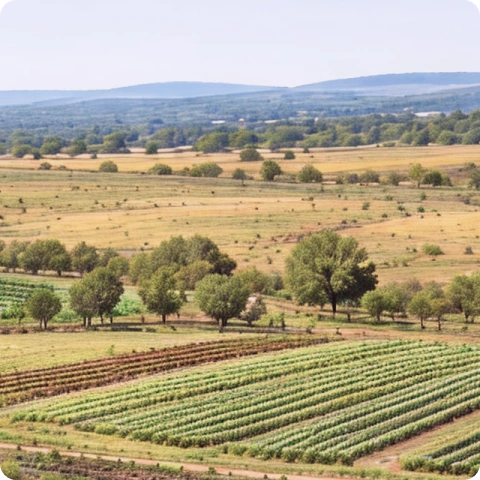
Regenerative agriculture is not a single technique but a system-based approach that adapts to local environmental conditions, crop types, and farming practices. It is guided by principles that aim to restore ecological balance while maintaining productivity.
Instead of focusing only on output, regenerative agriculture considers the long-term health of the entire system, including soil organisms, water cycles, and plant diversity.

Regenerative agriculture is a principles-based system rather than a fixed methodology.
Typical outcomes observed in regenerative agricultural systems
7–12%
Global GHG from Agriculture
+34%
Higher Mineral Content
10×
Faster Soil Rebuilding
75%
Input Cost Reduction
The potential for regenerative agriculture to both reduce and avoid greenhouse gas emissions is significant on multiple fronts:
Soil management
Soil is one of the most effective natural ways to remove CO₂ from the air. The atmosphere holds about 3,300 gigatons of CO₂ (around 900 Gt of carbon), while the top meter of soil stores nearly 2,500 Gt of carbon—about three times more. However, soil degradation has already released large amounts (78 Gt) back into the air.
Regenerative farming methods such as cover crops and crop rotation, protecting and restoring carbon-rich ecosystems such as forests and peatlands, and applied soil treatments such as biochar and rock weathering (adding silicate minerals to soil) significantly increase soil’s capacity to capture and store carbon.
Capturing carbon in soil
Increasing soil carbon by 0.4% per year in the top 30-40 centimeters of agricultural soil could offset the annual rise in human-caused atmospheric CO₂. Regenerative agriculture on its own can achieve this goal with only 50% of farmland adoption and has the potential to exceed it by up to 2.5X if combined with restoring carbon-rich ecosystems (forests, peatlands, etc.) and preserving existing carbon sinks (permafrost, old forests) from further degradation.
Bottom line
Increasing carbon capture in soil is a significant piece of the climate puzzle, and the additional benefits of healthier soil in terms of enhanced nutrition, health, farmer economics, and food security make regenerative agriculture a promising investment area.

The 4 per 1000 Initiative
Launched at COP21 Paris (2015)
Goal: Increase global soil carbon by 0.4% annually
Vision: Offset anthropogenic CO₂ emissions through soil sequestration
Global Target
+0.4%
Annual soil carbon increase needed (4 per 1000 Initiative)
Conventional
-0.3
Tons CO₂/acre/year LOST from soil degradation
Regenerative
+2.0
Tons CO₂/acre/year STORED through soil building
Ground vegetation
Ground vegetation captures carbon by absorbing carbon dioxide during photosynthesis and storing it in leaves, stems, and roots. While soils usually hold more carbon overall, vegetation stores it more quickly in living biomass—often about one-third as much as the soil in the same area. For example, a temperate forest might store around 50–150 tons of carbon per hectare in vegetation compared to 150–300 tons in its soil. Practices like reforestation, agroforestry, and sustainable forestry can boost this storage, making vegetation an important partner to soil in balancing the carbon cycle.
Mycorrhizal networks
Fungal networks, especially mycorrhizal fungi, help lock away carbon by moving sugars from plants into the soil. About 5–20% of the carbon plants capture is passed to these fungi, which store some in their own biomass but send much more into the soil, where it can remain for decades or centuries. In a typical forest, vegetation might hold 50–150 tons of carbon per hectare, soils 150–300 tons, while the fungal network itself holds a smaller share—often just a few tons—but plays an outsized role in moving and stabilizing carbon underground.
Carbon storage distribution across ecosystem components
Carbon Pool
Soil
~150–300 tons of carbon
Largest long-term reservoir; carbon can remain for centuries or more.
Vegetation
~50–150 tons of carbon
Stored in leaves, stems, trunks, and roots; more dynamic, faster cycling.
Fungal Networks
~2–5 tons of carbon
Smaller direct store, but critical in transferring 5–20% of plant carbon into soil.
Fertilizer emissions
Synthetic fertilizers (nitrogen, phosphorus, and potassium) contribute significantly to agriculture’s emissions and have additional negative health impacts when harmful substances make their way into the soil and groundwater. Regenerative techniques, such as keeping soils continuously covered with living roots and utilizing precision agriculture, reduce fertilizer use, which lowers both costs and associated emissions.
Food waste
Food loss and waste total roughly 1 billion tonnes globally, with economic costs nearing US $1 trillion annually, and account for 8–10% of global greenhouse gas emissions. Reducing food waste complements regenerative agriculture by improving system efficiency and helping farmers scale regenerative practices profitably. Waste reduction also amplifies climate benefits, since fewer resources are used to produce food that is never eaten.
The Why
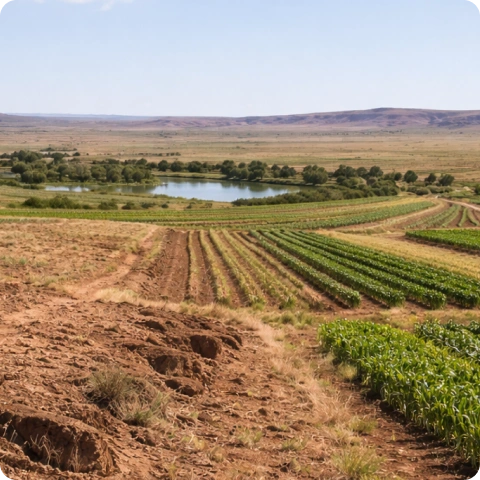
Not only do the direct greenhouse gas emissions caused by modern agriculture make a heavy contribution to global warming, but indirect emissions are also created as trees and habitats that absorb emissions are destroyed in favor of grazing land.
The climate footprint of our current food and agriculture industries is enormous, contributing 34% greenhouse gas emissions, but the negative health impact is also significant.
Large-scale commercial farming methods destroy natural eco systems, deplete soil resilience, practice inhumane treatment of livestock, and make heavy use of fertilizers and other inputs that are detrimental to both the environment and human health.
The benefits of regenerative agriculture in terms of planetary resilience, animal welfare, and human health are significant:
Planetary resilience
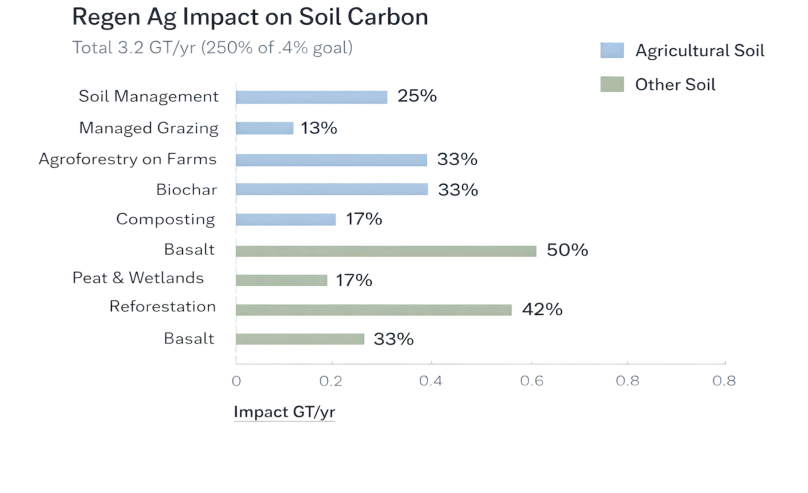
Nature is mankind’s best friend when it comes to planetary health and has robust built-in mechanisms in soil and vegetation to capture and store greenhouse gases. If 50% of farms practiced regenerative farming, the .4% boost in soil carbon would be enough to offset annual atmospheric C02 increases. If regenerative agriculture were extended to include non-agriculture land, that target could be exceeded by as much as 250%.
Breaking down the impact
We’ve used several different sources to estimate the total potential of soil regeneration toward the .4% target. While figures may differ from model to model, it’s clear that soil health can have a significant impact on carbon storage and sequestration.
Bottom line
Regeneration of agricultural soil could achieve the .4% target with 50% adoption of practices, but this target can be exceeded by up to 75% with ambitious deployment of biochar, weathering, and agroforestry. Regeneration of non-agricultural soil could contribute an additional 92% - enough to exceed the .4% target by up to 2.5x and roughly doubling the impact if included in a global carbon strategy.
Animal welfare
Commercial farming produces food for billions of people, but unlike regenerative agriculture doesn’t prioritize the wellbeing and responsible management of livestock. Each year, tens of billions of animals are raised and slaughtered for meat, eggs, and dairy worldwide, while a significant portion of food - roughly a third - is never eaten. The number of animals farmed continues to rise each year with corresponding emissions, compounded as more trees and ecosystems are destroyed in favor of grazing land.
Human health
Conventional agriculture has achieved incredible yield rates and per capital caloric supply over the last decades, but the nutritional density of our food has dramatically declined while the harmful or non-nutritious content has increased. As a result, a large part of the modern diet is heavily composed of empty calories and harmful substances such as pesticides, taking a heavy and increasingly expensive toll on human health.
Investment
By 2050, 9 billion people will need twice today’s food supply. Regenerative agriculture offers a promising solution, delivering healthier food with broad benefits for people and planet. For investors, regenerative agriculture offers distinct processes, supply chains, and price points but lacks proprietary IP, so returns and risks diverge from traditional VC models. The critical first step is defining what’s fixable and monetizable.
Market
Opportunity
Land Value
Premium
Carbon Credit
Revenue
Premium Pricing
Potential
With that in mind, we see the following areas as top investment priorities:
Consumer apps
Conventional farming aggregates harvests with no way to distinguish quality or nutrition. The shift begins with tools to measure and report climate impact and nutrition density - giving consumers transparency, preventing hidden costs, and enabling price premiums that reward healthier farming practices.
Business tech
The business side of regenerative agriculture is wide open for innovation. From using AI to cut food waste to monitoring crop health, technology can improve forecasting, optimize supply chains, and reduce costly crop failures, driving both efficiency and higher returns. These are just early examples in a much broader opportunity space.
Input tech
Innovations in seeds, soil amendments, and water or microbial management can boost productivity while staying regenerative. By improving yields, nutrition, and resilience, these solutions reduce risk for farmers and create monetizable opportunities through product sales, licensing, or subscription models - making input tech a key lever for scaling sustainable agriculture.
Public sector
The public sector offers monetizable opportunities in regenerative ag. Early forest fire detection and forest health monitoring can cut public costs, protect ecosystems, lower insurance premiums, and generate revenue through government contracts and grants - pointing to a broader market for tech that serves both environmental and budget goals.
Biomaterials
Fast-growing trees and other regenerative crops offer opportunities to replace conventional materials with sustainable alternatives. Innovations in cultivation, harvesting, and processing can unlock new revenue streams while supporting carbon sequestration and ecosystem restoration - making biomaterials both a profitable and planet-positive investment.
Farm operations
On-farm technology is a key lever in regenerative agriculture. AI-driven predictions and planning, robotics and automation, and MRV systems for bio-services can optimize costs, reduce labor, and provide reliable feedback for farmers. These solutions unlock efficiency and precision at the source, complementing broader business-tech innovations.
Medicinal food
Regenerative agriculture boosts the macro- and micronutrient density of food, supporting better health outcomes while reducing healthcare and insurance costs. This creates monetizable opportunities through premium products, subscriptions, and partnerships with healthcare-focused retailers and insurers.
Functional food
Rising consumer demand for nutrient-rich, regenerative foods creates clear investment opportunities for regenerative agriculture. Premium products, subscription models, and partnerships with retailers, schools, cafeterias, and hotels can generate scalable revenue while promoting healthier diets.
Bioengineering services
Technical interventions like bespoke fungal networks or engineered soil microbiomes create measurable value for farmland and forests. Farmers benefit from healthier, more resilient crops, while food companies and other stakeholders gain from higher yields, consistent quality, and traceable regenerative practices - unlocking monetizable opportunities through service contracts, subscriptions, and premium supply agreements.
Transition enablement
Transitioning to regenerative agriculture requires lowering adoption barriers and providing localized expertise, financing, and supply-chain support. Investment opportunities include enabling farmers with risk-optimized capital, education, and expanded market access - unlocking returns as farms scale regenerative practices and generate premium outputs.